Nervous system regulation: what it means and how to practise it
"Regulate your nervous system" has become a popular phrase. But what does it actually mean, and how do you do it in an ordinary day, between emails, traffic and family? Here is a clear, grounded guide.
Your nervous system is constantly asking one question: am I safe right now? The answer shapes your breathing, heart rate, digestion, muscle tone, mood and even how you see other people. Regulation is the art of helping that system find its way back to balance, again and again.
In short
- Regulation is not being calm all the time; it is the flexibility to activate and then settle.
- The autonomic nervous system has a "mobilise" mode and a "rest and recover" mode; health lives in moving between them.
- Slow breathing, orientation, touch, movement and connection are reliable ways to send safety signals.
- Small daily practice trains the system better than occasional big efforts.
What is nervous system regulation?
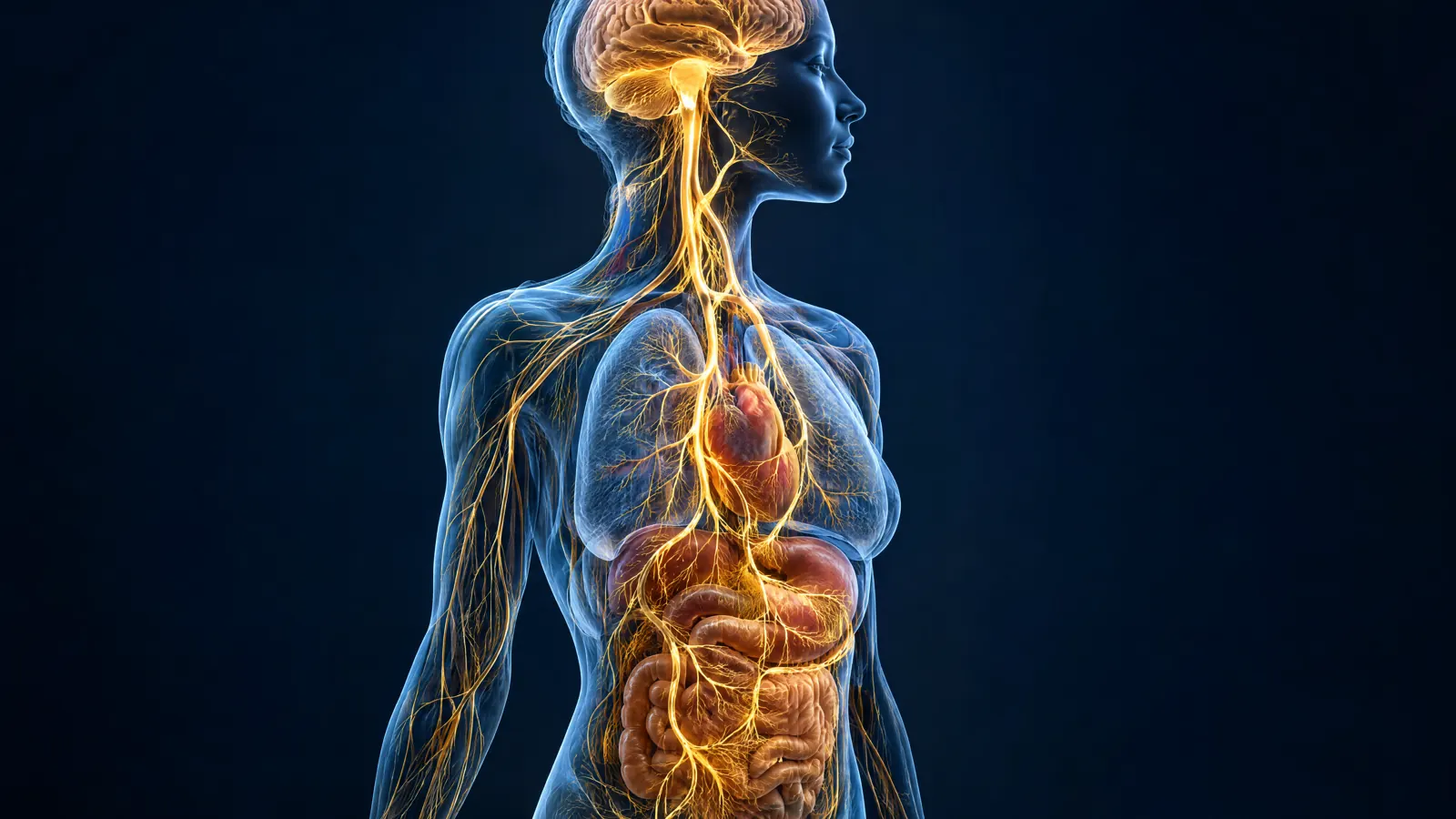
The autonomic nervous system works mostly outside our awareness. Its sympathetic branch prepares us to act: faster heart, more energy, sharper focus. Its parasympathetic branch, carried largely by the vagus nerve, supports rest, digestion, repair and connection.
A regulated nervous system moves smoothly between these states. You can rise to meet a challenge, then come back down. Dysregulation is when the system gets stuck: always "on", unable to rest, or collapsed into exhaustion and numbness.
Signs your nervous system needs support
- feeling wired, restless or on edge most of the day
- trouble falling or staying asleep
- irritability, or overreacting to small things
- feeling numb, flat or disconnected from your body
- tiredness that sleep does not fix
- shallow breathing, tight jaw or shoulders, a nervous stomach
These signs are common, and they are information, not failure. They also overlap with medical conditions, so if they persist, talk to a professional.
Five daily practices for regulation
1. Breathe slower, exhale longer
Breathing around six breaths per minute, with a long, relaxed exhale, is one of the best researched tools we have. A 2022 review of 223 studies found that voluntary slow breathing increases vagally mediated heart rate variability during and after practice.
2. Orient to the room
Slowly turn your head and look around. Name five things you see. This simple act tells the oldest parts of the brain that the environment has been checked and is safe.
3. Feel your ground
Press your feet into the floor, feel the weight of your body on the chair. Physical contact and weight are direct, non-verbal safety signals.
4. Move and shake
Activation that is not used stays in the body. A brisk walk, shaking your arms and legs, or gentle bouncing gives it somewhere to go. The body's own neurogenic tremors are a natural version of this.
5. Connect
A warm voice, a kind face, a hand on the shoulder. Humans regulate each other. Time with people you feel safe with is part of nervous system care, not a luxury.
The 4–6 reset
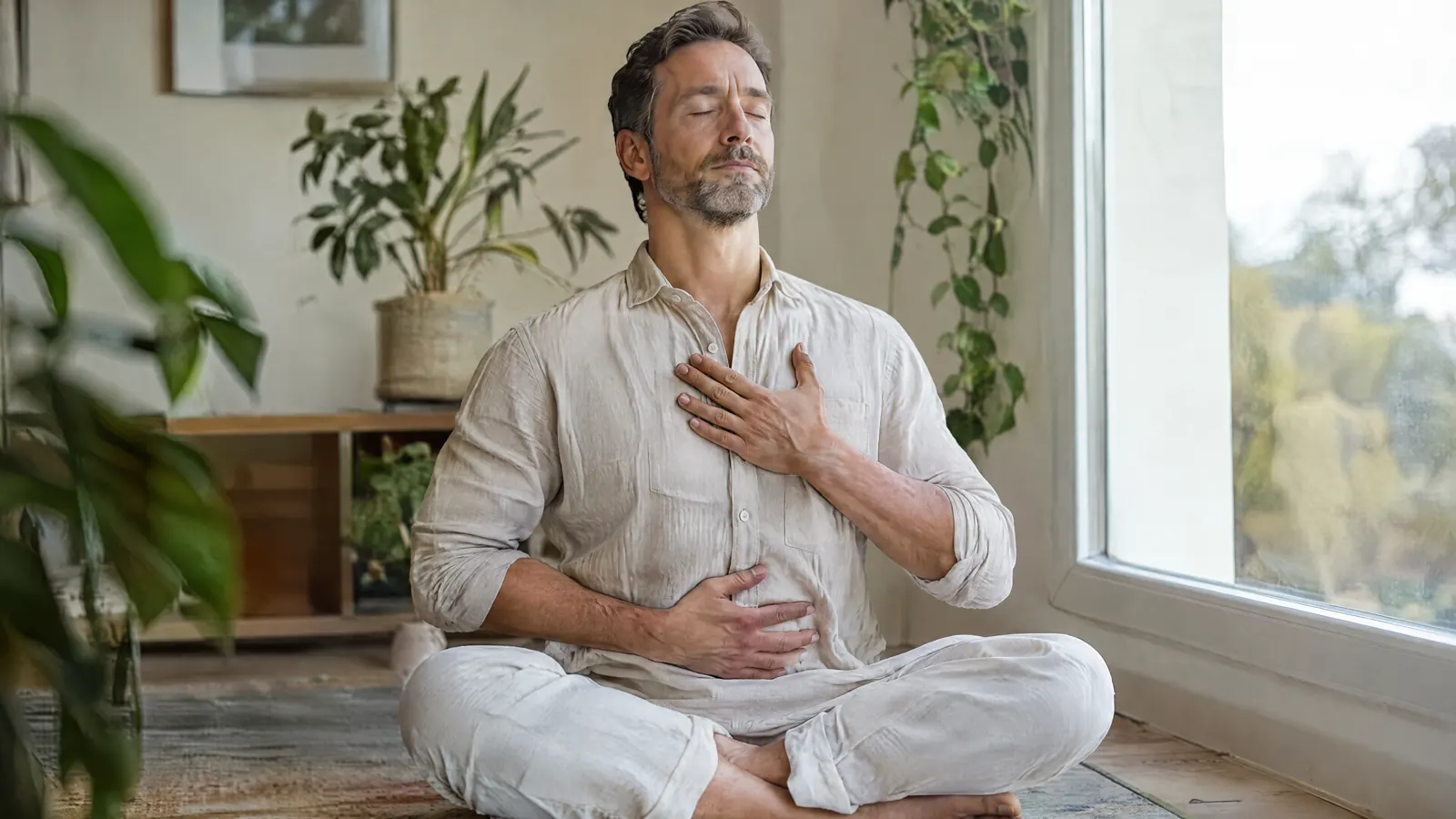
- Sit with your feet on the floor. Place one hand on your chest and one on your belly.
- Breathe in through the nose for a count of 4, letting the belly hand rise.
- Breathe out slowly for a count of 6, as if through a straw.
- Repeat for ten breaths. Let the exhale become softer each time.
- Look around the room and notice one thing you like.
A note on maps and theories
You may have heard of polyvagal theory, which describes states of safety, mobilisation and shutdown. It offers a useful language, and many therapists work with it. Some of its specific scientific claims are still debated, so we treat it as a helpful map rather than settled fact. What is well established is that breath, movement, touch and safe connection all influence the autonomic nervous system.
Regulation in Sensory Energetics
Sensory Energetics (KSE®) is a neuro-somatic method built around regulation. Through precise touch on vital points, breath, movement and sensory awareness, it helps the nervous system move out of chronic holding and rediscover its natural rhythm, often through spontaneous tremors and deep relaxation.
Start with daily practice in the Self-Ignition Programme, read how to release tension stored in the body, or experience the method at a seminar.
Frequently asked questions
What does nervous system regulation mean?
It means the ability of your nervous system to respond to a challenge and then return to a calm, balanced state. A regulated nervous system is not always calm; it is flexible. It can activate when needed and settle again afterwards.
What are signs of a dysregulated nervous system?
Common signs are feeling constantly on edge or wired, difficulty falling asleep, irritability, feeling numb or shut down, exhaustion that rest does not fix, shallow breathing and muscle tension that does not go away. These signs can also have medical causes, so persistent symptoms should be checked by a professional.
How can I regulate my nervous system quickly?
Slow your breathing and make the exhale longer than the inhale, look around the room and name what you see, feel your feet on the ground, or place a hand on your chest or belly. These simple actions send safety signals to the nervous system within a minute or two.
What is the vagus nerve?
The vagus nerve is the longest cranial nerve. It connects the brainstem with the heart, lungs and digestive organs and is a main pathway of the parasympathetic nervous system, which supports rest, digestion and recovery. Slow breathing is one of the best studied ways to influence vagal activity.
Is polyvagal theory proven?
Polyvagal theory has been very influential and gives a useful language for safety and threat, but some of its specific anatomical and evolutionary claims are debated by scientists. We use it as a helpful map, not as established fact.
This article is for education and personal awareness. Sensory Energetics is not a medical or psychological treatment and does not replace professional care.

Dr. Daniel FlashFounder of Sensory Energetics (KSE®), Doctor of Natural Medicine and former martial arts World Champion. He has taught Kyusho and somatic energy work for more than 20 years, in 68+ countries. Read his story.
Train your nervous system every day
The Self-Ignition Programme gives you short daily guided practices to regulate, release and recharge. Seminars take the work deeper, in person.